Building a Natural Home Apothecary: A Beginner's Guide
Learn how to stock your home with essential herbs, spices, and natural ingredients to create a simple yet effective wellness toolkit for everyday use.
Important Notice: This article is for informational purposes only and does not constitute medical advice. Home remedies are not a substitute for professional medical care.
Your Journey to a Natural Home Apothecary
A home apothecary is simply a curated collection of natural ingredients that you keep on hand for everyday wellness needs. Think of it as a natural companion to your regular medicine cabinet, stocked with herbs, spices, and simple preparations that have been used for generations.
Building one does not require a large investment or specialized knowledge. With a handful of versatile ingredients and some basic supplies, you can create a practical wellness toolkit that serves you well throughout the year.
Essential Herbs to Start With
If you are new to natural wellness, these five herbs provide a solid foundation:
1. Chamomile (Dried Flowers)
Chamomile is one of the most versatile herbs for a home apothecary. Use it for evening teas, as a gentle facial steam, or in a warm bath for relaxation. Store dried chamomile flowers in an airtight glass jar away from direct light.
2. Peppermint (Dried Leaves)
Peppermint is a staple for digestive comfort and refreshing teas. Its cooling properties make it useful year-round. Dried peppermint retains its potency well when stored properly.
3. Ginger (Fresh and Dried)
Keep both fresh ginger root in the refrigerator and ground ginger in your spice cabinet. Fresh ginger is excellent for teas and cooking, while dried ginger works well in warming preparations during the colder months.
4. Lavender (Dried Buds)
Lavender is prized for its calming aroma. Use dried lavender buds in sachets for your linen closet, add them to a warm bath, or combine with chamomile for a soothing evening tea blend.
5. Echinacea (Dried Root or Leaves)
Echinacea has a long history of use during seasonal transitions. Many people keep echinacea tea on hand as part of their autumn and winter wellness routine.
Essential Pantry Staples
Beyond dedicated herbs, several common kitchen ingredients serve double duty in a home apothecary:
- Raw honey — A versatile ingredient for soothing teas and natural preparations
- Apple cider vinegar — Used in various traditional wellness practices
- Turmeric — Valued for its curcumin content and warm, earthy flavor
- Coconut oil — A multi-purpose staple for skin care and cooking
- Sea salt — Useful for gargling solutions and bath preparations
Basic Supplies You Will Need
Setting up your apothecary requires minimal equipment:
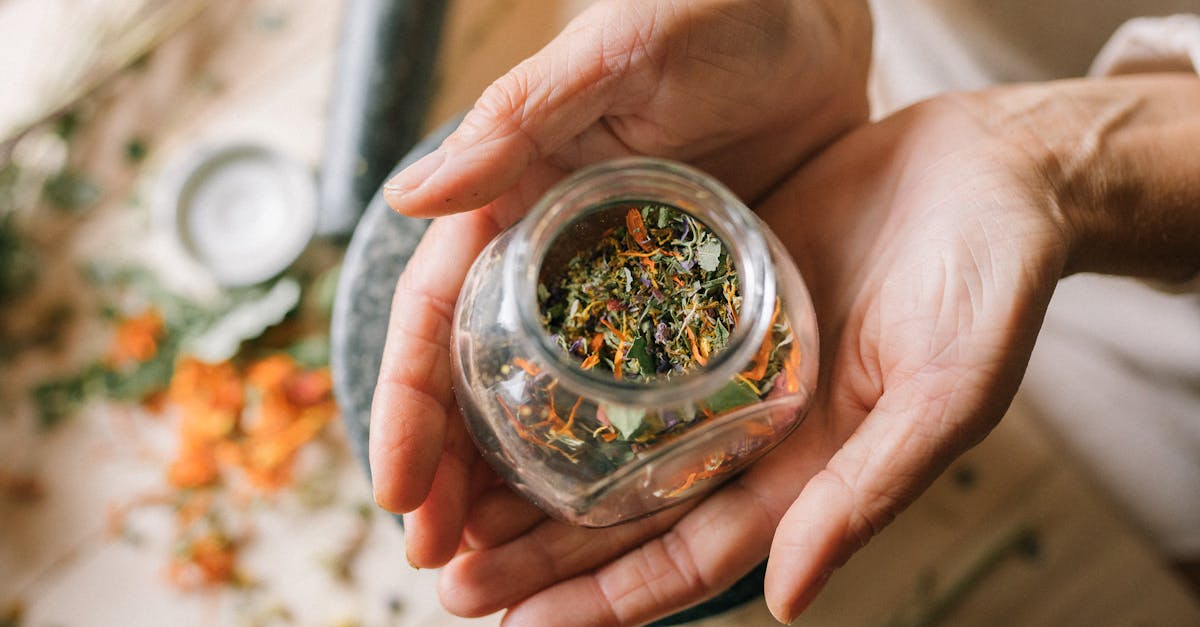
- Glass mason jars in various sizes for storing dried herbs
- A fine mesh strainer or tea infuser for preparing herbal teas
- Small amber or dark glass bottles for tinctures and oils
- Labels and a marker for dating and identifying your supplies
- A mortar and pestle for grinding dried herbs (optional but useful)
- Muslin bags or cheesecloth for creating bath sachets
Storage and Organization Tips
Proper storage is essential to maintaining the potency of your herbal ingredients:
- Keep dried herbs in airtight glass containers rather than plastic
- Store your apothecary in a cool, dark, dry location
- Label every container with the herb name and purchase or harvest date
- Most dried herbs maintain their quality for about one year
- Replace any herbs that have lost their aroma or color
Simple Preparations to Try
Once you have gathered your basic supplies, try these beginner-friendly preparations:
- Soothing tea blend — Combine equal parts chamomile, peppermint, and a pinch of lavender
- Warming ginger honey — Mix grated fresh ginger with raw honey and let it infuse for a few days
- Relaxing bath soak — Fill a muslin bag with lavender buds, chamomile, and sea salt
- Herbal steam — Pour hot water over peppermint and chamomile in a bowl for a facial steam
Growing Your Apothecary Over Time
Start small and expand gradually. As you become comfortable with your initial herbs, consider adding ingredients like elderberry, rosemary, calendula, and lemon balm. Pay attention to which herbs you reach for most often and stock up accordingly.
The beauty of a home apothecary is that it grows with your knowledge and needs. There is no rush to have everything at once. Even a single jar of chamomile and a container of raw honey is a meaningful beginning.